
In today’s industry, the demand for **Easy-Viber repair and calibration** and the continuous availability of machinery and high-quality production is greater than ever. We expect maintenance work to be performed quickly, correctly, and accurately, which necessitates measurement tools that provide correct and up-to-date information every time. This is particularly true for measurement and laser alignment tools, as they must verify that rotating machinery is correctly aligned and operating in the best possible conditions. Unnecessary downtime and complications that can affect the production process and lead to financial losses must be avoided. Consequently, the user must perform their preventive maintenance tasks with complete confidence in the laser measurement system.
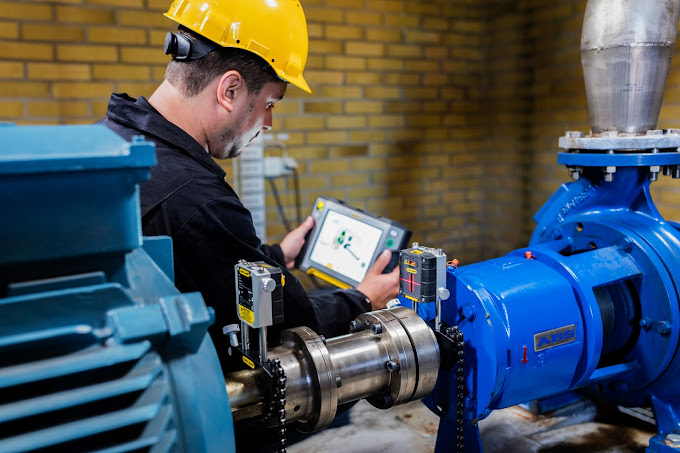
We humans also undergo health checks to examine our vital bodily functions for diagnosis, prevention, and timely correction of issues. A “health check” for a measurement system is just as important! The consequences of a poorly performing laser system can, in the long run, lead to the complete failure of many machines, which, if the machines are critical, can result in a production process shutdown. In this context, product quality may also be affected, personnel may be injured, maintenance work may take longer, etc.

Vibration testing is vital for the diagnosis of any machine with a rotating shaft in its operation. From small motors to giant generators used by utility companies, and even propeller aircraft shafts (fixed-wing and rotary-wing)—vibration testing is crucial for monitoring the health of rotating components. Following initial testing to establish a baseline of measurements, recording measured vibration with a calibrated vibration meter is essential for planning maintenance and preventing catastrophic failure. Vibration meter calibration provides greater flexibility in selecting the vibration meter used to track a machine’s vibration history, thereby allowing for proper maintenance planning and avoidance of unexpected catastrophic breakdowns.
Customers who depend on vibration monitoring can visit the Noavaran Payesh calibration unit for the calibration of their vibration meters and sensors. Noavaran Payesh calibration test systems can calibrate vibration meter devices. The heart of the vibration test unit is the vibration sensor, accelerometer, or velocity meter. This device provides the signal measured by the vibration meter/analyzer. The Noavaran Payesh calibration unit also provides calibration for these devices using vibration sensors and calibrators. In summary, devices used to measure and generate known vibration values fall within the scope of expertise offered by Noavaran Payesh and are reliable for providing trustworthy calibration/verification.
How often should Easy-Viber Repair and Calibration be performed?
At Noavaran Payesh, we recommend that “normal users” perform calibration every other year. Those working with high precision and ISO standards usually calibrate annually based on internal requirements or certification body mandates. Many of our distributors offer rental systems while the system is being serviced so clients can continue their work in parallel. High usage of the measurement system is not an excuse for not sending it for calibration checks; on the contrary, if you use the device frequently, you will need continuous calibration.
How is Easy-Viber Repair and Calibration performed?
The Noavaran Payesh **Easy-Viber repair and calibration** service center utilizes a step-by-step method to ensure optimal system performance during calibration and service. This process always begins with the customer filling out an online service form, describing potential faults as accurately as possible and outlining the required corrective actions. Typically, a combination of device servicing and calibration is needed to resolve the issue.
When the device arrives at the service center, an incoming inspection is conducted, followed by cleaning and a functional check according to a checklist:
- * Serial number check – Testing serial number correspondence with system parts
- * Charger health check and correct operation
- * License check, ensuring all functional parts of the software system are available
- * Software updates on display and measurement units
- * Laser power check and adjustment
- * Detector check
- * Communication check between devices
- * System check – Measurement, saving, report generation
After system verification and approval, a calibration certificate is issued.
How long does Easy-Viber Repair and Calibration take and how much does it cost?
**Easy-Viber repair and calibration** generally require varying times depending on workload and system type (belt, shaft alignment, geometric systems). Systems are usually returned after 5 to 8 business days. Depending on the system, prices range from $100 to $1000, subject to local price variations worldwide. Compared to the costs that may arise from production stoppages or the delivery of incorrectly manufactured products, this is truly an investment that pays off!