
Maintenance based on Condition Monitoring (CM) is the most effective existing strategy for managing physical assets. To implement this strategy, Condition Monitoring (CM) tools are used. In CM, repair is performed based on the condition of the machine under care.
In this method, instead of periodic repairs, the machine’s condition is monitored periodically. In this case, repairs are performed only when the device needs repair. Methods and techniques such as vibration analysis, oil and wear particle analysis, thermography, ultrasonic analysis, etc., are among the condition monitoring techniques.
Among these, and as acknowledged by most specialists, vibration analysis is one of the most fundamental and efficient CM techniques for rotating machinery and equipment. In many industries and factories, rotating equipment is considered key equipment; therefore, the importance of the vibration analysis technique for implementing CM in such industries is completely evident.
How is Condition Monitoring (CM) implemented and executed?
By employing the vibration analysis technique using related hardware and software equipment on rotating machinery, it is performed as follows:
- Specifying and marking measurement points on the designated machinery
- Vibration measurement of all specified equipment on a monthly basis
- Vibration evaluation of machinery
- Frequency analysis of machinery for troubleshooting
- Providing emergency reports after data collection for equipment that has dangerous vibrations
- Providing complete monthly analytical reports for all equipment that underwent vibration
- measurement in accordance with the vibration measurement report format
Condition Monitoring (CM) is currently being implemented in the following industries nationwide:
- Steam, gas, and hydro power plants
- Oil and gas industries
- Steel industries
- Petrochemical complexes
- Wood and paper industries
- Cement factories
- Transportation
- Automotive industries
- Food industries – Seaports, etc.
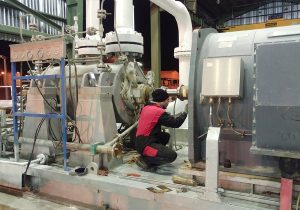
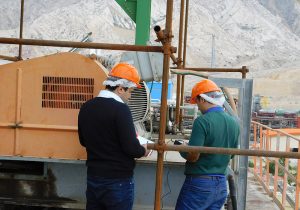



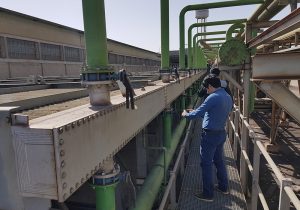
What is Condition Monitoring?
In maintenance, condition monitoring or condition care refers to a set of actions that determine the machine’s condition by monitoring the machine’s state and examining its changes over time based on parameters such as vibrations, sound, performance, lubrication, and temperature. Condition monitoring is one of the main components of predictive maintenance. Predictive maintenance has had the most application in maintenance methods in advanced countries in recent decades.
In this method, the condition of machinery is examined and inspected at specific time intervals, though these intervals depend on the equipment’s importance. The device status is recorded and monitored during periodic inspections, and in case of observing any type of failure, its growth rate is monitored; and at a time before the device’s destruction, it is taken out of service and the specific defective part that was previously determined is repaired.
It should be noted that since the device’s defect is identified and monitored in advance, we are prepared beforehand for the failure of a specific part of the equipment and consequently, we can seek to procure the necessary accessories for repairing the machine before the machine breaks down. Given that we take the device out of service ourselves before an unwanted stop, the damages and costs resulting from the unwanted stop of the device are eliminated, and additionally, by doing this, damage to other parts of the equipment is prevented.